Posts

Showing posts with the label DIY

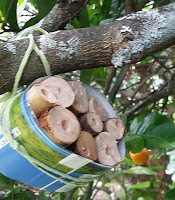
Make a Bee Hotel for New Zealand's native bees.
Image
Whare o Ngaro huruhuru. Worldwide we know solitary-Bees need our help. Instructions on making the best ★★★★ bee hotel to give a native solitary bee a place to rest and nest in your backyard.  Menu Why How Native Habitat & Biology Construction Instructions Native bees are black and small.  Aotearoa's  native bees look like flies or flying queen-ants  because we think bees are the imported yellow-striped hive bees!!     We might have accidentally killed one or two in years gone by, thinking they were shitty flies .     The NZ government suggests that we put a bee hotel in each backyard, to help the bees escape the dangers of urban life, where they now struggle and die due to pesticides, concrete ground and lawn-mowing.   A bee hotel mimics bee holes in the ground. Native bees dig holes in the ground, to live in.  Each bee digs it's own home.  While native bees are solit...
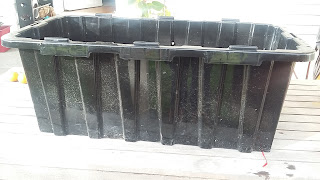
How to Make small Aquaponics wicking bed kit. (Architect's Exploded plan)

Image
1. Get your fish-tank. The recomended minimum size for a fishtank is 200 Liters as one block unit. Drill 2 holes on opposite sides and tie some nylon string as 'braces' to prevent the tank from buckling when it's full. the top 'oblong' shape will bend outwards when the tank is full, and this will cause cracks. So you need to keep the oblong shape of the tank, by tieing 1 or 2 "strainers" across the lesser width. Cost: $60 2. Build your table to sit above the fish tank Click Here for >>> Free Plans for stable table <<< The table should be stable so the legs wont cave in. The table should be light enough for you to carry into place during installation. if you can attach wheels to the whole thing, so you can move the kit. Great! 3. Get your wicking-bed tank The wicking bed should be at least 30cm deep, and a max of 40 to 50 cm deep. Having one wicking bed instead of two or more in sequential series, is better. ...